(UNITING)
Corner Curzon Street and Elm Street, North Melbourne
Too valuable not to be sold?
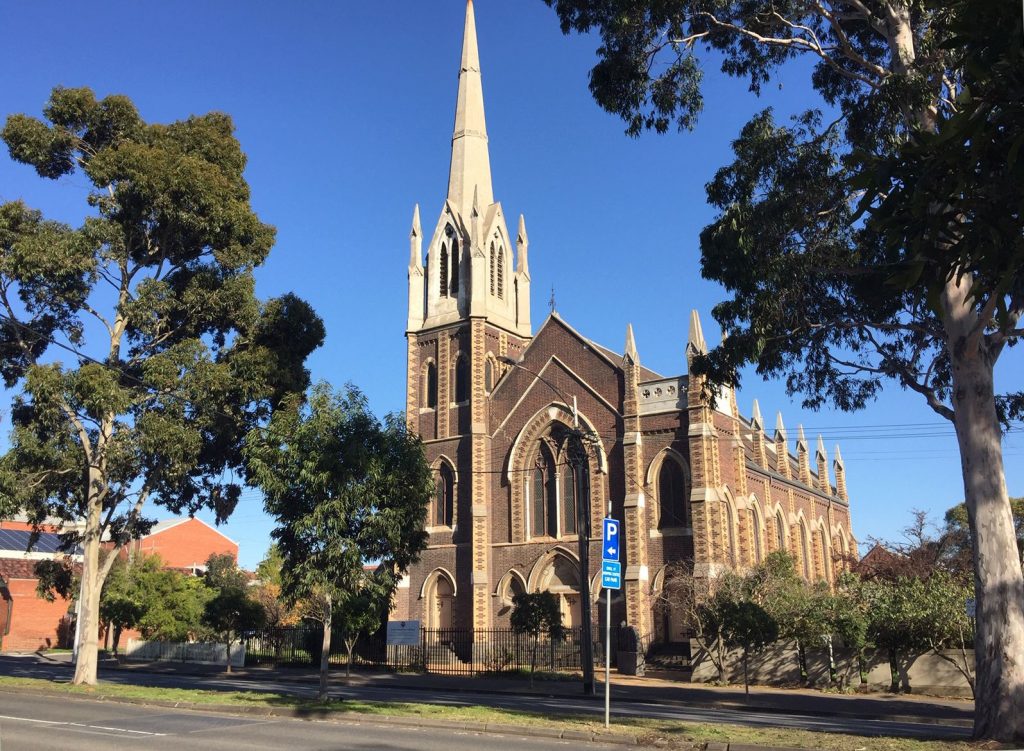
It had to come. A cavernous church on a valuable site in the inner city couldn’t be left alone forever before someone realised its sales potential, particularly when that church belongs to the Uniting Church, ever keen to turn its properties into cash. And now this spired and pinnacled edifice in Curzon Street, North Melbourne, has been sold for a reported $10 million.
I am no expert in land values, but that doesn’t sound a very high price for a site of 4822 square metres containing church, hall and manse. But perhaps it’s not such a bargain after all, since the new buyer, who is described as an “overseas investor” – now where do you suppose “overseas” means? – is stuck with a church building protected from substantial alteration by all sorts of “heritage” constraints and which you can’t use for much else. It will be interesting to see in this case whether the heritage constraints extend to internal changes, since being carved up inside into apartments has been the fate of many a large church sold for secular use. The principle seems to be, as with the imposing former Presbyterian churches in East Melbourne, Armadale, Brighton and Moonee Ponds, and quite a few others, that as long as you don’t disfigure the outside too much – a few dormers and solar panels are all right – it doesn’t much matter to the heritage authorities what you do to the inside of an historic erstwhile place of worship.
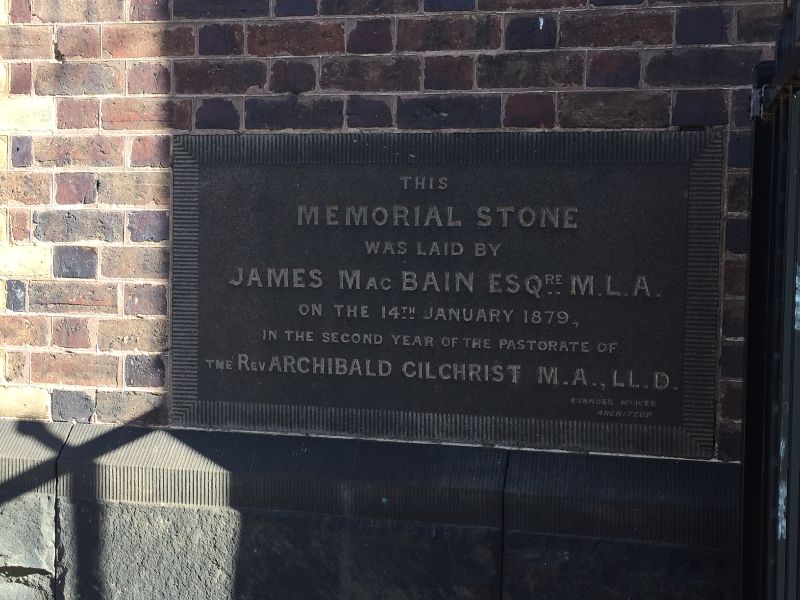
The North Melbourne Uniting church, now known to those who attend it (and are looking for alternative accommodation) as the Congregation of Mark the Evangelist, was built for a Presbyterian congregation in 1878-79. Its official name was the Union Memorial Church, the union commemorated being the formation of the United Presbyterian Church of Victoria from three Presbyterian groups in 1859. The architect was Evander McIver (1834-1902) who arrived in Australia from Scotland at the age of 30 and designed several notable Presbyterian churches, among them Scots’ Church in central Melbourne and St Cuthbert’s, Brighton. The North Melbourne church was designed to hold a congregation of nearly 900 in its wide and lofty nave.
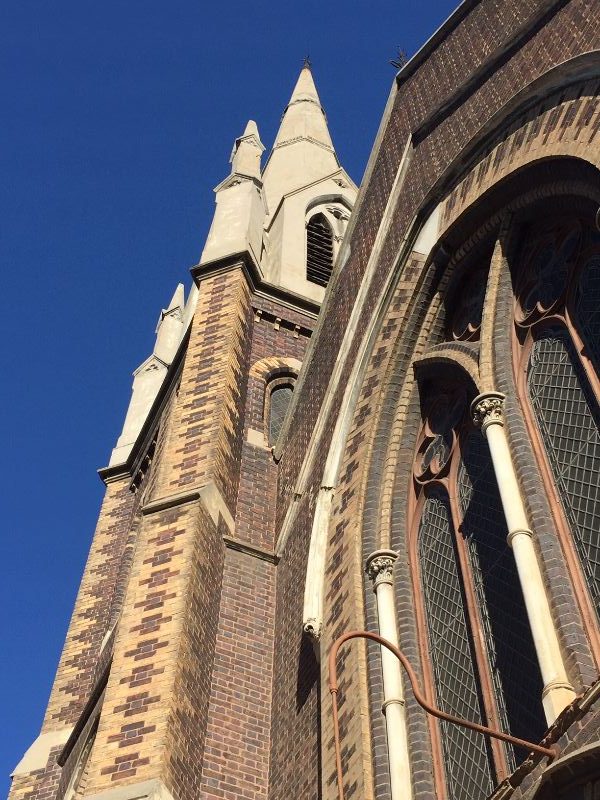
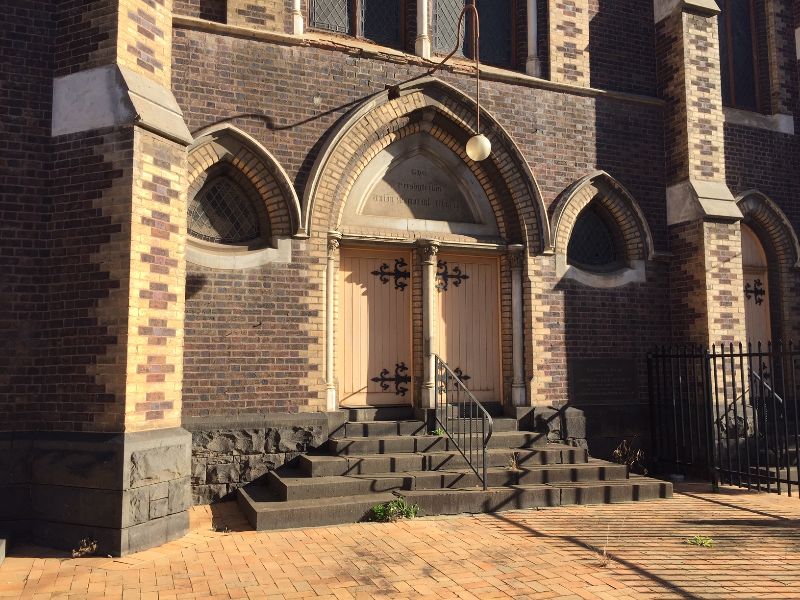
The most prominent feature of the church is its 45-metre tower and spire at the (liturgical) north-west corner. The tower is pinnacled at the corners with large lucarnes – Gothic dormers – on four sides at the base of the spire, which is unusually small by comparison. There are tall pinnacles above the buttresses of the nave and on the low corner tower which flanks the façade of the nave, matching the lower stages of the tower on the other side. The walls are a notable example of polychromatic brick and stonework.
Along with the church, there is an eight-bedroom former manse on the site and two halls, in one of which the political meeting was held in 1955 in which the Labor Party split on the issue of communism, leading to the formation of the Democratic Labor Party two years later.
 HERE TODAY...