(FORMERLY METHODIST)
CORNER OF NEIL AND MACARTHUR STREETS, BALLARAT
Yet another “arts centre”.
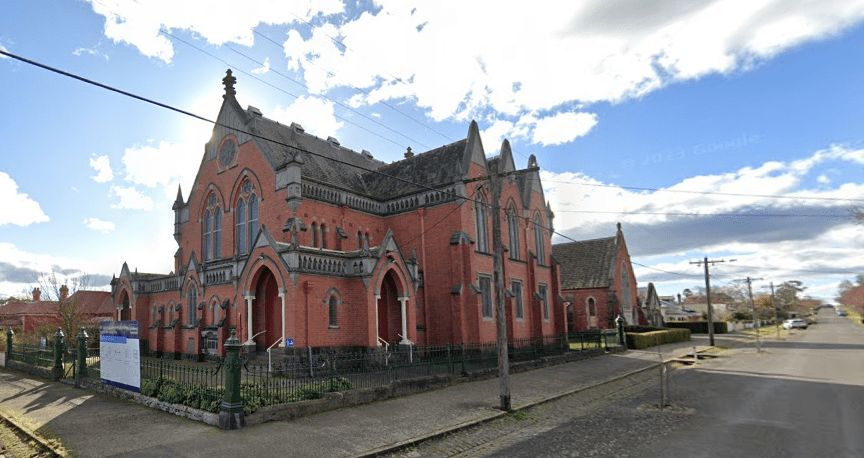
One by one, they shut down, the Uniting churches of Ballarat. The most prominent, St Andrew’s, and the Pleasant Street church have already long since passed into secular use (see separate posts). Soon the only church left in the city centre will be Wesley Church in Lydiard Street. The latest to go is this grandiose edifice on a prominent corner in Neil Street. Too cavernous for a reduced modern congregation, it held its final service on 5 February 2023 and a year later was put up for sale as a “development site”.
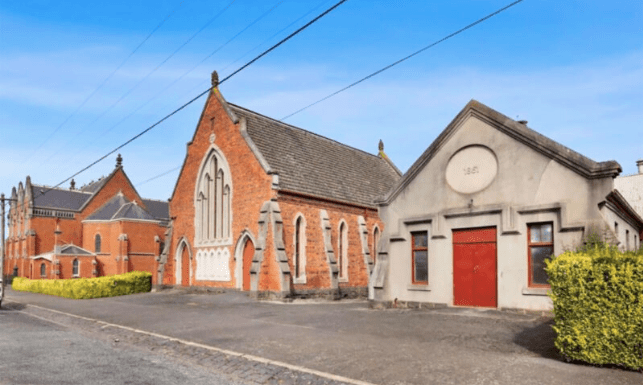
The church is the third on the site – the earlier two, one brick, one timber, are behind it and used as halls. It was built for Ballarat’s then flourishing Methodist community. Methodists were numerous in Ballarat as a consequence of the gold rush (gold was found at Ballarat in 1851) when many Cornish miners and their families arrived to try their luck on the diggings and settled in the district. The historian Geoffrey Blainey records in his memoirs that when his father went to Ballarat as a minister in 1941, the Methodists had more churches – eleven – than the Anglicans and Roman Catholics put together. That remained the case until 1977, when Methodist congregations in Ballarat were subsumed into the new Uniting Church, which has since proceeded to sell off many of the former Methodist buildings, the latest being that in Neil Street.
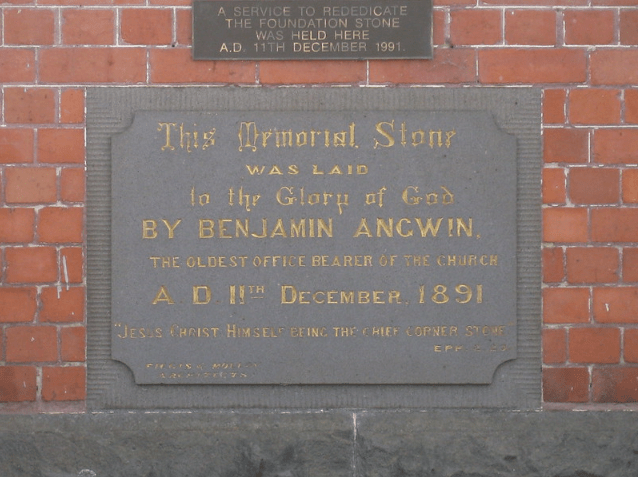
The foundation stone was laid in December 1891 and the church opened ten months later. The architects were Figgis & Molloy, who also designed the nearby Scots’ Presbyterian church (see post).
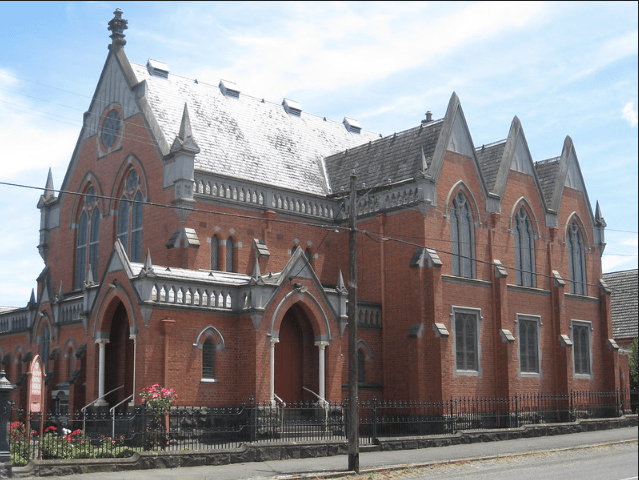
Resting solidly on foundations of bluestone and concrete, the Neil Street church is built of brick, with dressings of stucco and roofed in slate, in a conventional Protestant arrangement of the era, that is, Gothic details and ornament applied to an unGothic auditorium.
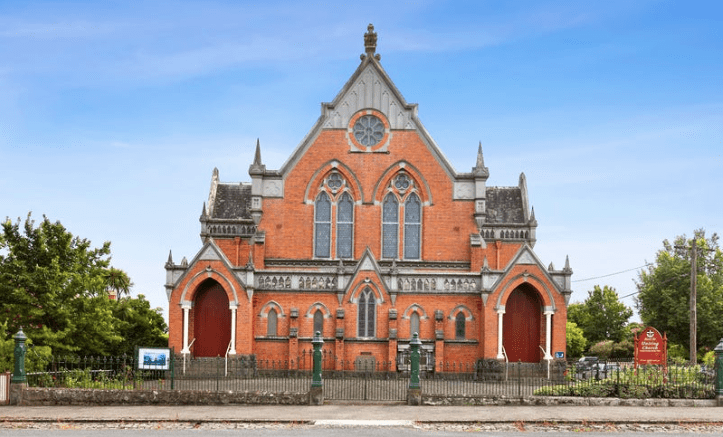
Picture: https://victas.uca.org.au/church/ballarat-neil-street
The imposing lofty façade has corner pinnacles on corbelled shafts and, uppermost in the gable, a genuine “wheel window” with radiating tracery. Its principal feature is two tall double-light windows with plate tracery. Below these a projecting enclosed narthex, also liberally pinnacled, runs the width of the church. with gabled porches at either end.
The sides of the building – and here we really depart from Gothic convention – consist of two bays of nave and three abutting gabled transepts, making a five-bay elevation in all. The transepts are open to the nave internally., separated only by slender iron columns, also quite unGothic, reminiscent of the kind you see on a nineteenth-century shop veranda or railway platform canopy. The combined interior space of nave and transepts forms a capacious auditorium, rectangular in plan. At the north (liturgical east) the nave ends in a shallow apsidal chancel that, in line with Methodist tradition, contains the choir and pulpit. A rectangular chamber behind the choir houses the organ.
The transepts have two rows of windows, which suggests the existence of galleries, now removed. It is clear that this church was built to house a very large congregation.
Unlike so many churches that close, this one may yet be saved from radical “redevelopment”. The building was first put up for sale for its site value, but the Uniting Church has agreed that if a local arts association, which for several years had held rehearsals and concerts in the church, can raise the purchase price, they will be able to acquire it as a “performing arts venue and hub”. Though the best outcome for threatened churches is that they remain churches, use as an arts venue will at least preserve the building and its interior reasonably intact and save it from demolition.
Some of the information in this post is taken from the entry on the Neil Street church in the Organ Historical Trust of Australia’s gazetteer.
 HERE TODAY...
One thought on “NEIL STREET UNITING CHURCH BALLARAT”