CENTRAL SPRINGS ROAD, DAYLESFORD
One of the finest spires in country Victoria.
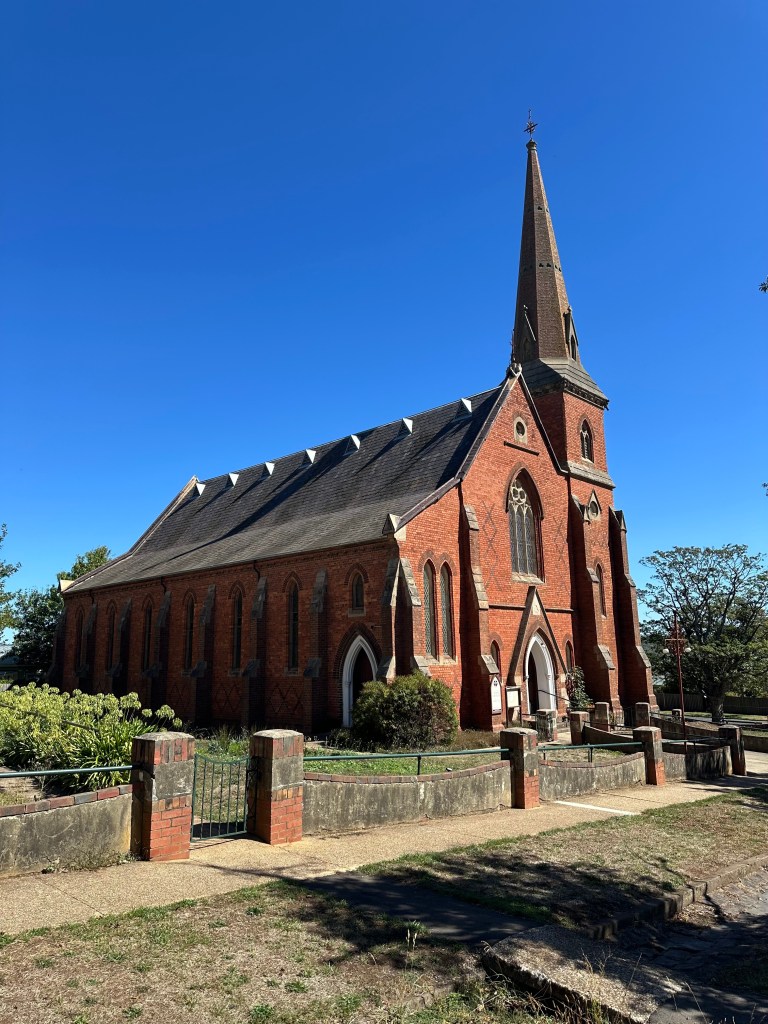
Above the trees that cloak the hill on which the pretty central Victorian spa town of Daylesford is built, three silhouettes stand out as you approach from the south: the spiky turret of the state school, the square Italianate tower of the post office and the brick tower and spire of the Methodist, now Uniting, church. The Anglican and Roman Catholic churches nearby have no spire or tower; only this solitary, graceful spire indicates a Christian presence in Daylesford.
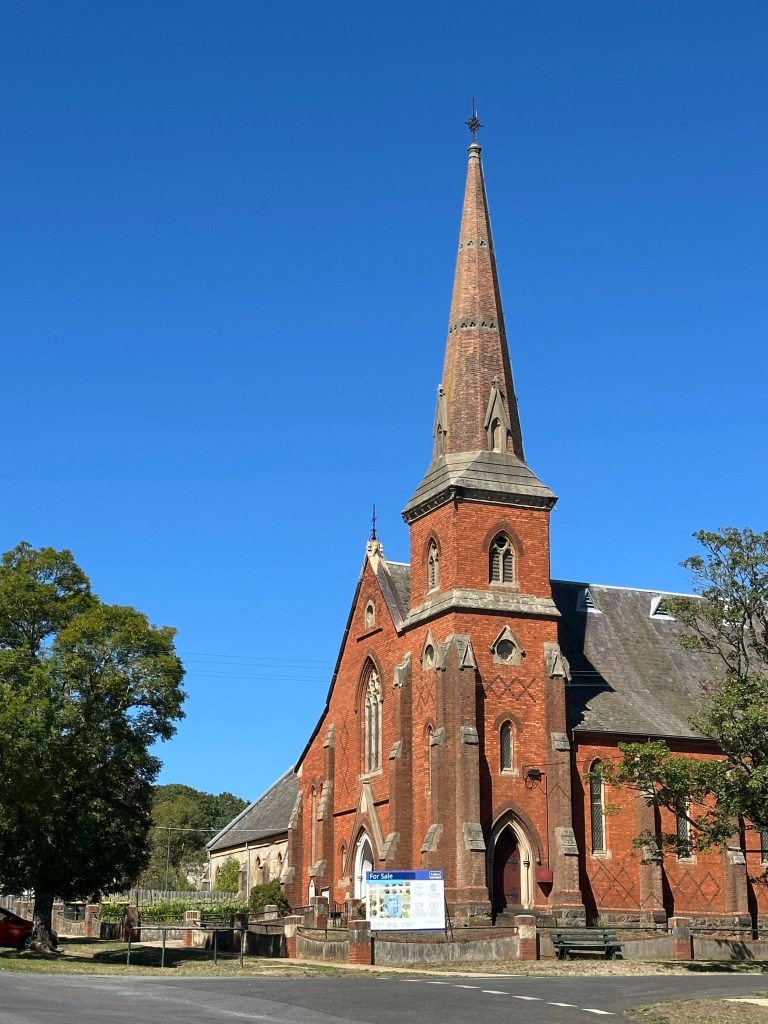
Soon there will be no indication at all, and this spire will designate someone’s house, or flats, or some sort of secular “space” for arts or “community use”. The ebbing tide of religion in Australia has left the church beneath the spire closed and up for sale.
Country churches are being shut down and sold all the time. Usually they are plain little buildings, perhaps of weatherboards with iron roofs, with no pretensions to architectural distinction. For the ecclesiologist, if that term isn’t too self-important, it is a pity when they go, but much sadder when an important and eye-catching church is separated from the function for which it was built (see St Kilda Presbyterian church). This proclaims to all who see it, as though in huge letters, that Christianity is in retreat, that it has shut up shop in this particular place, that its mission is abandoned.
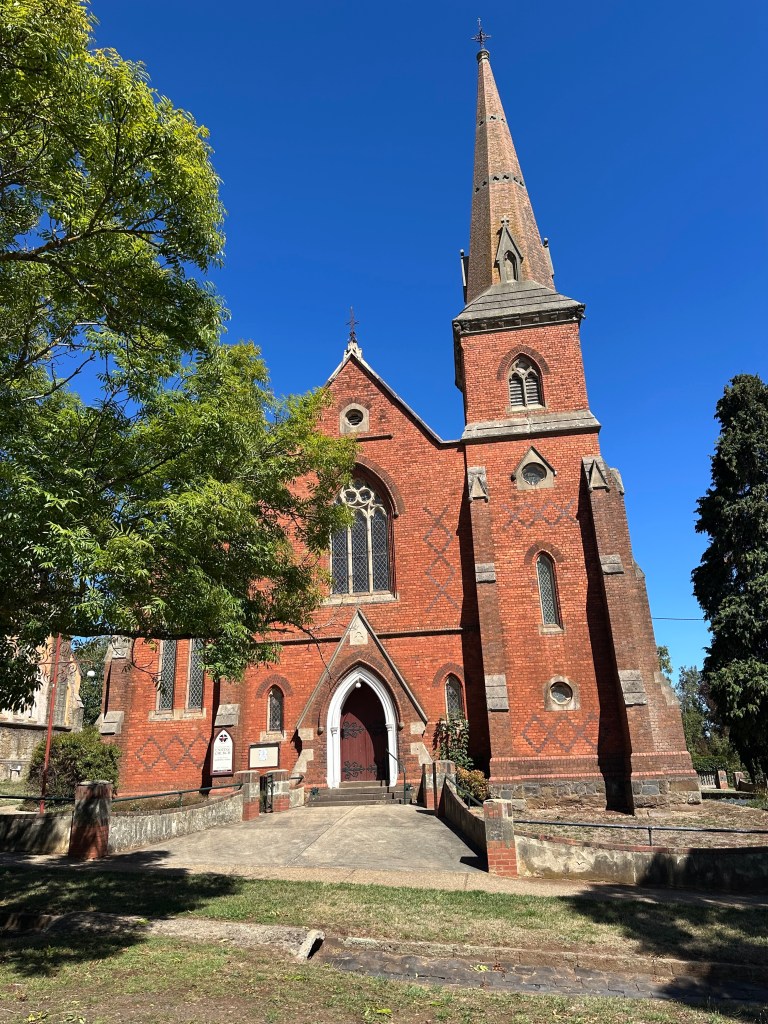
The Daylesford Uniting congregation would perhaps dispute this, and they continue to meet elsewhere in the town. There would be less sense of melancholy if the church they have left wasn’t so obviously a church. That is the problem. Churches were once built in a particular ecclesiastical style to look like churches, and one that is secularised and “developed”, especially if it has a spire or tower or other ecclesiastical features, cannot but convey an air of departed purpose.
Costs of maintenance combined with smaller numbers attending church, and those that do getting older, are generally the reasons for church closures. History and experience suggest that this decline might not go on forever, and it would be better if unused churches could be “mothballed” or let temporarily to tenants who would maintain them with as few alterations or adaptations internally as possible. This is likely to happen in only a few cases.
The Daylesford Uniting church and the sandstone chapel beside it were designed by the firm of Crouch and Wilson, architects of a number of Methodist and Presbyterian churches (and the elaborate Immaculate Conception Roman Catholic church in Hawthorn, Victoria). The chapel at Daylesford was built first, in 1861, and the church four years later. The site slopes steeply towards the west.
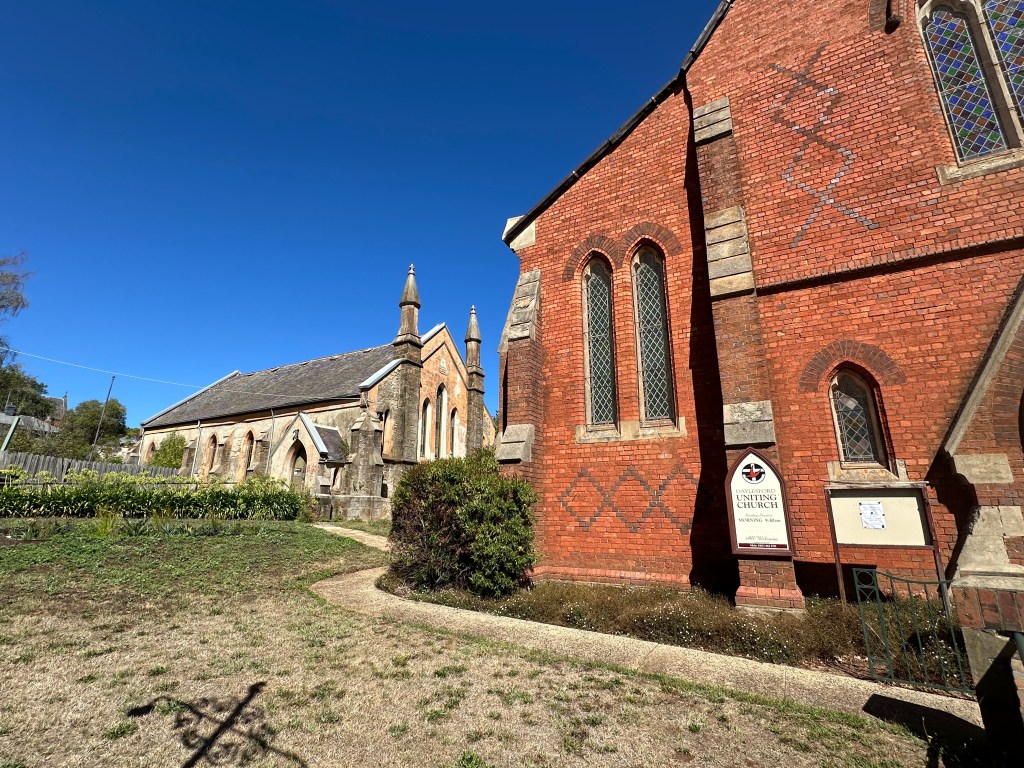
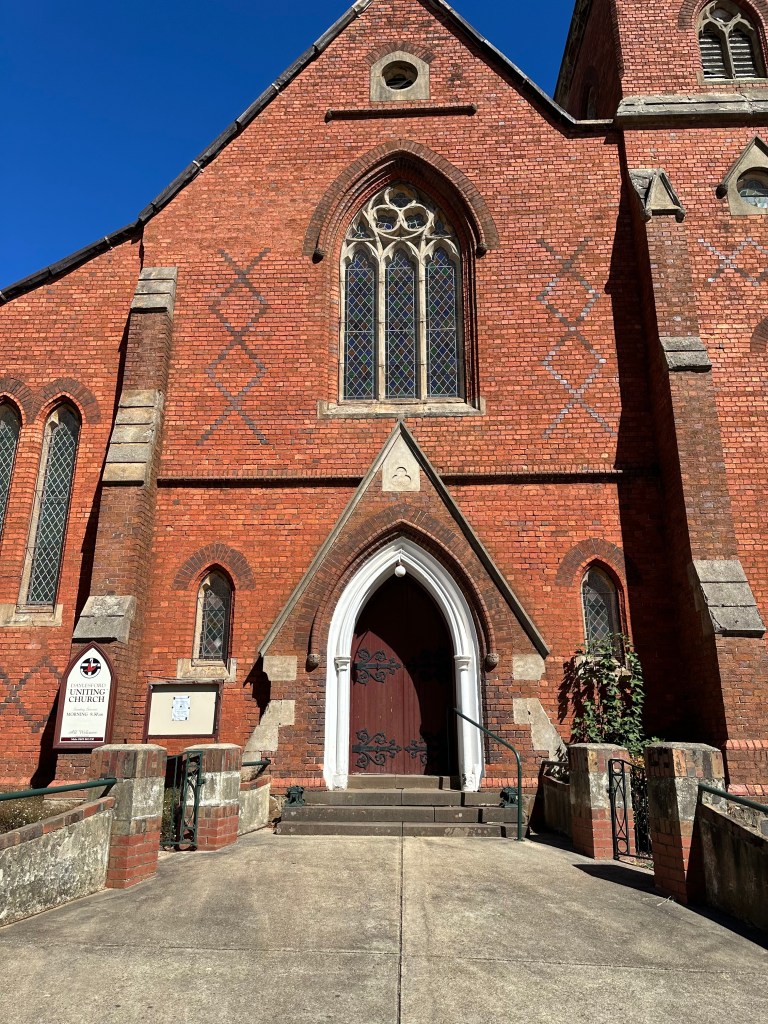
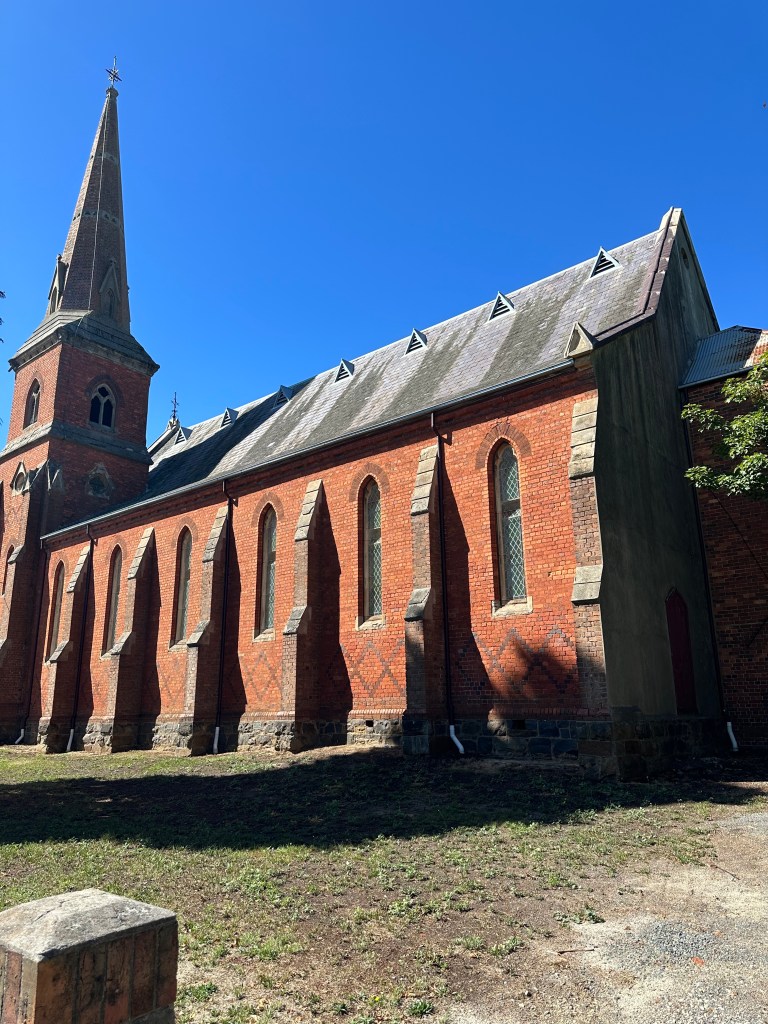
The church is built of brick in the Early English style of Gothic, and indeed is very “English” in appearance – it could almost be a country church in a village in a British tourism photo. It consists of nave and internal side aisles without a clerestory and has an unusual diaper-patterned façade. Its chief feature is the tower and spire, a graceful and architecturally correct composition. It is almost a replica in brick of William Wardell’s larger spire at St John’s Toorak, Melbourne, and is one of the very best of its type in country Victoria.
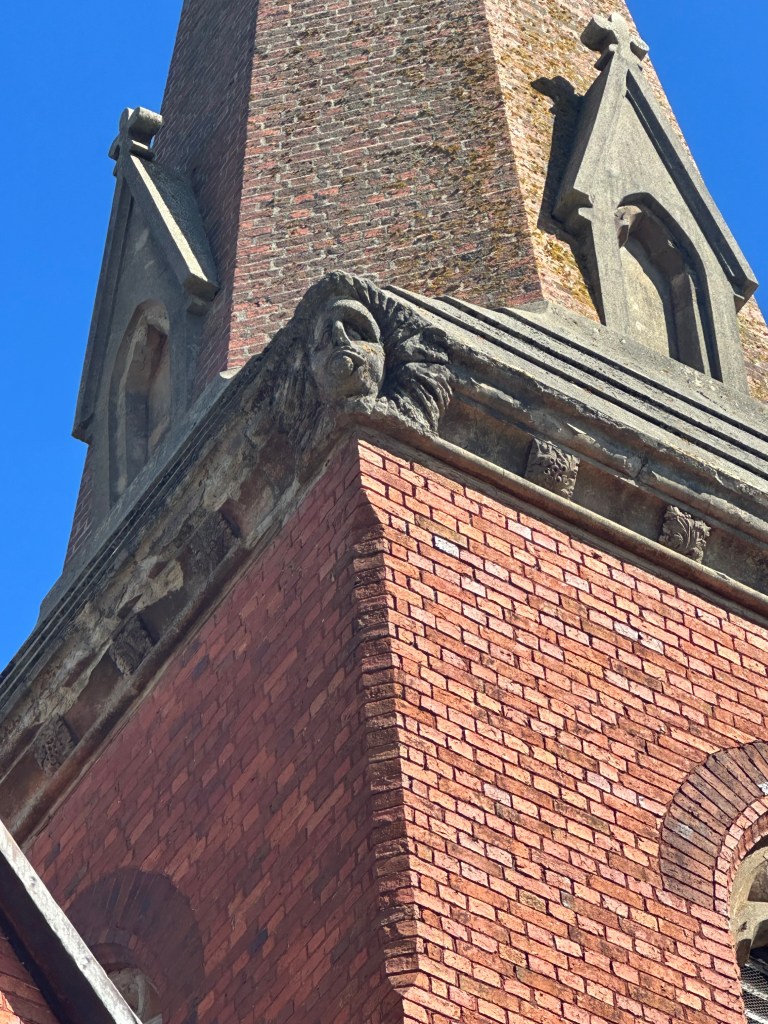
The tower is handsomely buttressed at the corners and has a two-light pointed window at the bell stage. The spire is in the broach form – a spire without corner pinnacles at the base – a rarity in Victoria (there are others at Brighton and Toorak in the Melbourne suburbs, at Geelong, Hamilton and Warrnambool). Of particular note is the corbelled cornice at the foot of the spire with carved rainwater heads in the traditional form of gargoyles at the corners.
The Daylesford congregation was flourishing, with well attended services and the usual round of social activities, in the 1950s and 1960s, but like so many others has been in decline ever since as Australians lost the habit of churchgoing – and nowhere more have they lost it than at Daylesford, a growing town full of tourists and new residents, with restaurants and lavish accommodation in abundance, yet now with two empty and redundant churches.
PHOTOGRAPHY FOR THIS POST BY ANTHONY BAILEY
 HERE TODAY...